 Articles
Check Your Own Work Before the World Does
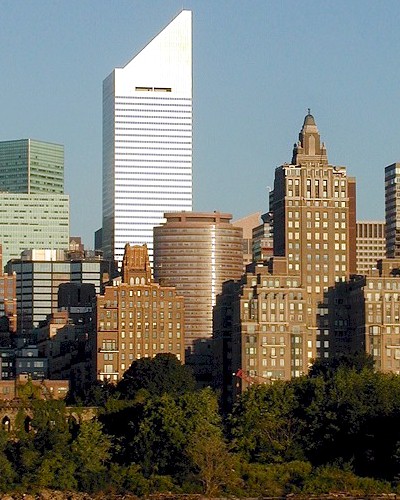
William LeMessurier's office took a phone call one warm day in June 1978. A student was on the line. The student had been studying the Citicorp Center in Manhattan, LeMessurier's best known building, finished the year before and among the tallest anywhere. The question was simple: why are the columns in the middle of each side, instead of at the corners?
There was a good answer, and LeMessurier had given it many times. A church occupied one corner of the site, and St Peter's Lutheran was prepared to sell the air rights only if its new sanctuary stayed put at street level. So the tower stands on four columns, each nine storeys tall, each placed at the midpoint of a face, cantilevering seventy-two feet over the church below. It was a bold solution, worked out with the architect Hugh Stubbins, and it had been checked, reviewed and built. The building was already occupied.
LeMessurier answered the student's question. Then, unusually, he went back and checked his own answer.
What the recheck found
The tower's skeleton relies on forty-eight diagonal braces, arranged in six tiers of eight chevrons. The original wind calculations had been run for winds hitting the faces square on. When LeMessurier recomputed the forces for quartering winds, blowing diagonally at the corners, he found the strain in four of the eight chevrons in each tier went up by 40 per cent.
That was uncomfortable, but on its own it was survivable. Then he learned something worse. Back in August 1974, Bethlehem Steel had proposed bolting the brace joints instead of welding them, to save money. His New York office had accepted the change. LeMessurier, working from his Cambridge office, only found out in May 1978, nearly four years later, when the building was finished and full of people.
The joints had been priced and checked as if the braces were trusses, not columns, which dropped the safety factor the steel specification required. Put the two discoveries together and the tension on the bolted joints rose by about 160 per cent over the original calculation. He took the problem to Alan Davenport's wind tunnel at the University of Western Ontario on 26 July, with one instruction: "you have to tell me the truth." The tunnel results said the joint most at risk, on the thirtieth floor, could fail in a storm of a size New York expects once every sixteen years. The building had a tuned mass damper, a 410-ton block of concrete floating on oil near the top, the first ever fitted to a tall building, and with the damper running the odds improved to one storm in fifty-five years. But the damper needed electric power. A hurricane brings power cuts.
What he did next
On 28 July, at his summer house on Sebago Lake, LeMessurier sat with the choice. He could stay quiet. The building had stood for a year; the odds on any particular August were long; his reputation was at its peak. Instead he drove back and told the client. On 2 August he sat down with John S. Reed, Citicorp's executive vice-president, and told him his headquarters, built at a cost of $175 million, might fall down. He estimated the repair at a million dollars. The meeting lasted half an hour.
What followed was documented in a thirty-page internal report called Project SERENE: the Special Engineering Review of Events Nobody Envisioned. Carpenters built plywood enclosures around the critical joints. Welders worked through the night, from 8 at night to 4 in the morning, seven days a week, thickening the joints with welded steel bandages. Weather forecasters were put on watch. On 1 September, with the work unfinished, Hurricane Ella came up the coast and the city stood hours away from evacuating the surrounding blocks. Ella turned out to sea a few hours later. The weather watch ended on 13 September; the welding finished in October. Strengthened, the tower was reckoned capable of standing through a seven-hundred-year storm even with the damper dead.
The whole episode cost about $4.3 million by LeMessurier's account of Citicorp's costs, $8 million by the contractor's recollection. LeMessurier's insurer settled for $2 million. Nobody sued. Almost nobody knew. Joe Morgenstern broke the story in the New Yorker in May 1995, seventeen years on.
The honest complications
Two parts of this story deserve care, because the tidy version hides them.
The first is the student. Morgenstern anonymised the caller as a male engineering student in New Jersey. In 2011, Lee DeCarolis recognised himself as that student, then a freshman at NJIT, and gave his own account. Separately, Diane Hartley had written a Princeton senior thesis on the building in 1978 and raised the quartering-wind question with LeMessurier's office. A 2025 review in ASCE's Civil Engineering Source records two unrelated calls from students. Whoever asked it, he took the question seriously instead of defending his drawing. The most useful check on his work came from outside, uninvited.
The second is harder. A team at the US National Institute of Standards and Technology went back over the wind analysis in 2019 and 2020, with methods the seventies did not have. Their finding: winds square to the faces govern the design, and the diagonal-wind combination that terrified everyone in 1978 probably did not need to be considered at all. The repairs, on this analysis, may never have been necessary, though the researchers cautioned that their conclusions do not account for the neighbouring buildings or the tower's exact geometry.
I think the NIST finding strengthens the story rather than weakening it. LeMessurier did not have forty years of computing power. He had a new doubt, a calculation he could not unsee, and a choice about what kind of engineer he was going to be. He chose to act on the worst honest reading of his own numbers, at real cost to himself, while there was still time. Your answer does not have to survive forty years of hindsight. It has to survive your own recheck, done before the world does its own.
Reading it through PRISM
I read this case through PRISM, the decision method set out in What Are We Missing?: Problem Framing, Research, Interpretation and Synthesis, with Metacognition standing over them all. PRISM is the working structure set out in the first chapter of What Are We Missing? I am reading the public record here, mostly the New Yorker account and the later NIST papers. I cannot know what LeMessurier thought, and one case proves nothing about a method. But it shows each move being made for real.
Problem framing: are we solving the right problem? The student asked about column positions. LeMessurier could have answered and stopped. The recheck addressed a bigger question: how the design behaved under quartering winds. The right problem was not the one he had been asked.
Research: what would prove me wrong? He went looking for the evidence that could condemn his own work. He recomputed the quartering winds himself, then asked Davenport's team to test his revised calculations against the wind-tunnel results, with the instruction quoted above.
Interpretation: what else could this mean? Every finding had a comfortable reading. Forty per cent more strain: survivable. Bolted joints: acceptable, taken alone. A 410-ton damper: reassuring, until you check what it runs on. None of the easy readings held.
Synthesis: what do all the pieces say together? A sixteen-year storm, a bolted joint on the thirtieth floor, an occupied tower. Together, those pieces said the client had to be told, and on 2 August he told Citicorp.
Metacognition: how confident should I be, and what am I missing? His confidence was at its peak: the building was celebrated, checked, reviewed and full of people. He treated that confidence as a thing to be tested rather than enjoyed. The NIST re-analysis four decades on, described above, is the look-back the rest of us needed even if he did not.
What I take from it
I have spent twelve years on major construction projects, and I know the pressure that arrives with a finished design: the programme wants the answer to stay yes. Every case in this series is about what happens when the second check never comes. Willow Island, Skyline Plaza, FIU: in each, the drawing was treated as the truth. Citicorp is the other side of the ledger. A man checked his own answer before the wind did, found it wanting, said so out loud, and fixed it at night, in plywood enclosures, with the mess cleared away before the first secretaries arrived.
The discipline is the one this book calls PRISM. Pause before the decision hardens. Recheck the load-bearing assumption, especially the one you signed months ago. Invite the outside question, because the student call does not arrive on schedule. And when the recheck finds a problem, the reputation you save by silence is worth nothing next to the building.
LeMessurier's own profession took seventeen years to hear the story, and even his own professional memoir, presented to an ASCE congress in April 1995, left the crisis out. That silence means the repair is remembered and the near-miss is not, and the next engineer starts work believing the drawings are always right.

Zafar Alam is a civil engineer and Chartered Construction Manager with about 12 years on major projects. He is the author of What Are We Missing? How to Think More Clearly Before You Decide, planned for 13 February 2027.
Read next
The walkway change that doubled a connection loadThe Hyatt Regency walkway load path, review stamps and the NBS capacity findings.The Cost of Analytical FailureThe Commission's account of the Macondo test and the decision to proceed.Sources
Joe Morgenstern, "The Fifty-Nine-Story Crisis", The New Yorker, 29 May 1995 - the primary account: the student's call, the quartering-wind recalculation, the bolted joints, the wind tunnel, Project SERENE, Hurricane Ella, the costs and the settlement.
Dat Duthinh, "Modern reassessment of the Citicorp Building design wind loads", 2020, with Park, Duthinh, Simiu and Yeo, "Wind effects on a tall building with square cross-section and mid-side base columns", Journal of Structural Engineering 145(5), 2019 - the modern reassessment finding face winds govern, with the researchers' stated caveat. Duthinh's 2018 "Citicorp Building repairs revisited" answers the same question from the design-record side.
Eugene Kremer, "(Re)examining the Citicorp Case: Ethical Paragon or Chimera", arq: Architectural Research Quarterly 6(3), 2002, pp. 269-276 - on the 1995 ASCE memoir's omission and the profession's seventeen-year delay: crosscurrents.org/kremer2002.htm
Online Ethics Center, "William LeMessurier - The Fifty-Nine-Story Crisis: A Lesson in Professional Behavior", including Lee DeCarolis's first-person account and the Diane Hartley addendum: onlineethics.virginia.edu/node/41606
ASCE Civil Engineering Source, 9 September 2025, review of Michael M. Greenburg, "The Great Miscalculation: The Race to Save New York City's Citicorp Tower" (NYU Press, 2025): asce.org review